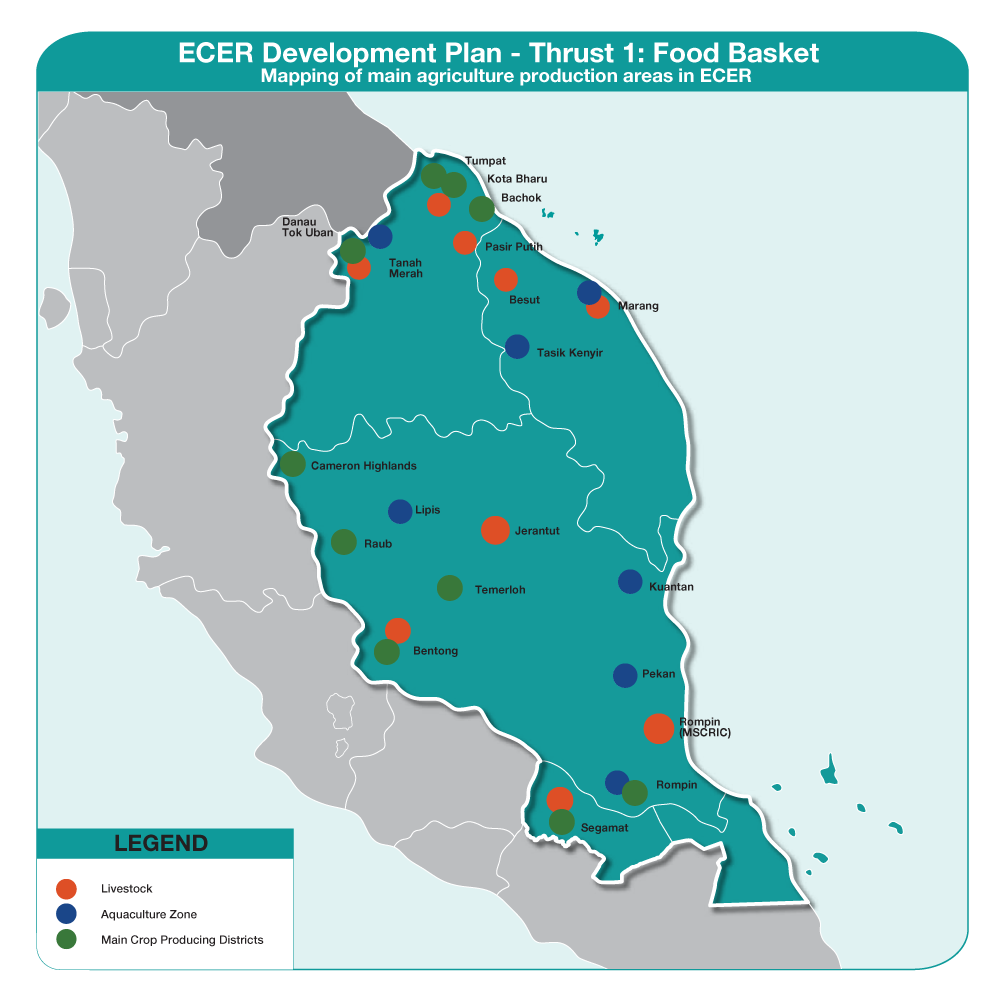
The Food Basket thrust in the ECER is driving transformation in agriculture by focusing on crops, livestock and fisheries to strengthen Malaysia’s food security and reduce reliance on imports. This initiative promotes large-scale, modern farming methods that combine traditional know-how with innovative technologies to maximise yield and value creation.
In crops production, ECER is enhancing Malaysia’s self-sufficiency in high-value produce such as chili and ginger through modern techniques including fertigation and greenhouse systems. For livestock, the Region is developing a private investment-driven dairy valley and expanding beef production supported by infrastructure facilities to ensure long-term sustainability. In fisheries, aquaculture output is being increased through programmes aligned with the National Agrofood Policy (NAP) 2.0, ensuring resilient and sustainable growth of the sector.
Collaboration with government ministries and research institutes such as the Ministry of Agriculture and Food Security (MAFS), Malaysian Agricultural Research and Development Institute (MARDI) and the Fisheries Research Institute Malaysia (FRI) is central to this thrust. Together, these partnerships aim to position ECER as a leading Food Basket for the nation while creating investment opportunities and empowering local communities.